If you’ve been scrolling TikTok, YouTube Shorts, or Roblox memes lately, you’ve probably seen the chaotic red gumball machine riding a bicycle and causing absolute mayhem online. That bizarre, oddly catchy character? It’s known as Chicletera Bicicletera, more accurately spelled Chicleteira Bicicleteira.
In 2026, this meme has evolved from a simple viral rhyme into a full-blown internet brainrot phenomenon, complete with remixes, fan lore, animated “family members,” Roblox integrations, and even dramatic evolution timelines stretching back 250 million years. Yes, you read that right.
What started as a quirky Brazilian TikTok post in mid-2025 is now a globally recognized meme, especially popular in the United States, Brazil, and parts of Europe. It blends absurd humor, anthropomorphic design, chaotic storytelling, and remix culture into one unforgettable digital character.
But what exactly is Chicletera Bicicletera? Where did it come from? Why is it categorized under “Italian Brainrot” despite Brazilian roots? And why can’t the internet stop talking about it?
Let’s break it down.
What Is Chicletera Bicicletera? Meaning, Origin, and Translation
At its core, Chicletera Bicicletera is a viral meme character. However, the name most commonly used online is Chicleteira Bicicleteira. “Chicletera” appears to be a variation or misspelling that gained traction as the meme spread globally.
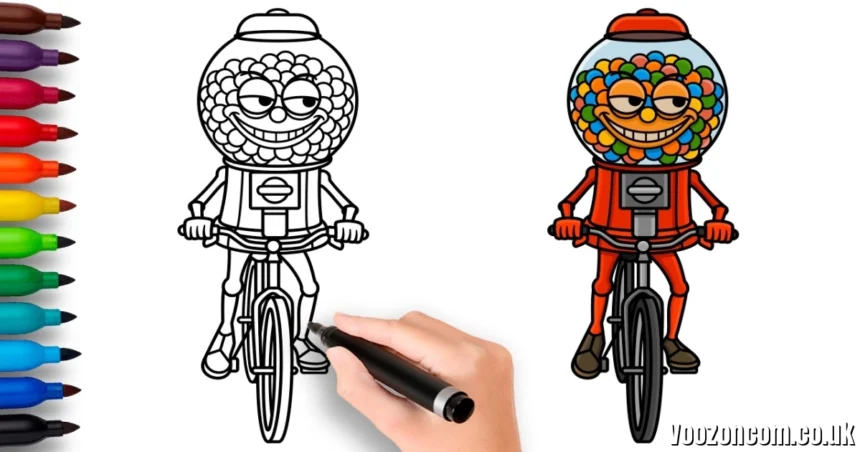
The character itself is typically depicted as:
- A red gumball machine
- With human-like eyes and expressive eyebrows
- A yellow gumball nose
- A mischievous, almost villainous smile
- Riding a black bicycle
- Often portrayed as chaotic or morally questionable
The concept is simple. The execution? Brilliantly absurd.
It fits perfectly within the “brainrot” meme category—content so repetitive, bizarre, and catchy that it sticks in your mind whether you like it or not.
Is It a Misspelling of Chicleteira Bicicleteira?
Yes. In most documented cases, Chicletera Bicicletera is simply a misspelled variation of Chicleteira Bicicleteira.
As the meme spread outside Brazil, spelling variations emerged due to:
- Non-Portuguese speakers adapting the pronunciation
- Auto-correct and caption errors
- Intentional remix culture changes
- Viral reposts across U.S. platforms
Memes thrive on mutation. The more they spread, the more they change. Slight name alterations often signal international adoption.
So whether you search:
- Chicletera Bicicletera
- Chicleteira Bicicleteira
- Chicletera meme
- Gumball machine bicycle meme
You’re likely referring to the same chaotic character.
Portuguese Translation and Cultural Context
The original Portuguese words break down like this:
- Chicleteira → derived from “chiclete” meaning chewing gum (loosely, “gum seller” or “gum dispenser”)
- Bicicleteira → derived from “bicicleta” meaning bicycle
So the combined meaning roughly translates to:
“Gum dispenser bicyclist”
It’s playful. Rhythmic. Catchy.
And that rhythm is what made the original TikTok explode.
The phrase has a sing-song quality that makes it perfect for repetition, remixing, and parody. In Brazil, rhyme-driven meme audio has historically performed well. The cadence alone can drive virality.
But this wasn’t just a rhyme.
It was the birth of a character.
The Viral Birth of Chicleteira Bicicleteira in 2025
Every major meme has a starting point. For Chicleteira Bicicleteira, that origin traces back to a viral TikTok in mid-2025 that quickly surpassed one million views.
The original clip featured a simple animated character and a playful rhyme:
“Chicleteira, bicicleteira
Sai pelas ruas dando bobeira”
Translated loosely:
“Gum seller, bicycle rider
Goes out on the streets being silly.”
It wasn’t complex animation. It wasn’t high production value. It was simple, absurd, and rhythmic.
That’s all it needed.
The Original TikTok That Started It All
The first viral post introduced the red gumball machine riding a bike, bouncing slightly in rhythm to the rhyme. Viewers were hooked by:
- The absurd visual
- The oddly catchy repetition
- The chaotic energy
- The mischievous facial expression
TikTok’s algorithm favors watch-time and replay value. Short, loopable rhymes encourage viewers to rewatch.
Within days:
- Remixes appeared
- Funk versions were created
- Fan animations started circulating
- Meme pages reposted it
And just like that, Chicleteira Bicicleteira was no longer just a TikTok video.
It became a universe.
The Catchy Rhyme That Broke the Algorithm
Let’s be honest—half of meme success comes down to sound design.
The rhyme:
- Has internal rhythm
- Uses repeating syllables
- Rolls easily off the tongue
- Is playful and nonsensical
It fits perfectly into Brazil’s strong funk remix culture.
Soon after the original clip, creators released:
- “CHICLETEIRA BICICLETEIRA FUNK” remixes
- Bass-boosted versions
- Nightcore edits
- Lo-fi parodies
- Roblox sound effects versions
Audio virality turned the character into a multi-platform phenomenon.
Once it crossed into U.S. meme pages, the momentum multiplied.
Character Design and Personality: Why This Meme Works
Memes with personality last longer than memes without one.
Chicleteira Bicicleteira isn’t just a drawing. It has lore. Attitude. Reputation.
Online, it’s often described as:
- A trickster
- A swindler
- A chaotic agent
- Having “zero decency”
- Enjoying watching others fail
That exaggerated villain personality is what fuels the humor.
The Anthropomorphic Gumball Machine Concept
Anthropomorphic objects are meme gold. When everyday items gain human traits, they become instantly shareable.
The design is simple:
| Feature | Description |
|---|---|
| Body | Red gumball machine |
| Nose | Yellow gumball |
| Expression | Smug, mischievous |
| Vehicle | Black bicycle |
| Movement | Slight bouncing animation |
It’s minimal, which makes it remixable.
Creators can:
- Redraw it easily
- Animate it quickly
- Insert it into games
- Add accessories
- Create “evil” or “cute” variants
Simplicity equals scalability.
Trickster Personality and “Zero Decency” Lore
Internet lore describes Chicleteira Bicicleteira as someone who:
- Cheats people out of gum
- Rides away laughing
- Enjoys chaos
- Thrives in absurd scenarios
This exaggerated moral ambiguity makes it funnier. It’s not scary. It’s cartoonishly mischievous.
In meme culture, the “unapologetic chaos gremlin” archetype performs extremely well.
And Chicleteira fits that role perfectly.
Italian Brainrot Trend and Meme Culture Expansion
By late 2025, Chicleteira Bicicleteira was no longer just a Brazilian TikTok joke. It had been absorbed into a broader internet category known as “Italian Brainrot.” Now, here’s where things get interesting.
Despite having Brazilian origins, the meme was grouped into Italian Brainrot due to its absurdist tone, anthropomorphic object design, and chaotic remix culture—hallmarks of the trend. Italian Brainrot doesn’t literally mean the meme is Italian. Instead, it refers to a hyper-specific meme aesthetic:
-
Over-the-top absurdity
- Repetitive rhymes
- Loud or distorted audio
- Anthropomorphic objects or animals
- Chaotic lore that escalates dramatically
In 2026, brainrot characters dominate short-form platforms. They’re intentionally low-logic, fast-paced, and slightly unhinged. Think of them as digital fever dreams that refuse to leave your head.
Chicleteira Bicicleteira fits this formula perfectly. A gumball machine on a bicycle? Already absurd. Add a mischievous personality and remixable audio? Viral fuel.
As the meme entered U.S. meme pages and Roblox communities, the categorization under “Italian Brainrot” solidified—even though culturally, it started in Brazil.
Memes don’t respect borders. They mutate, evolve, and rebrand.
And that’s exactly what happened here.
What Is “Italian Brainrot”?
The term Italian Brainrot exploded online in 2025 as a way to describe absurd, looping, high-energy meme characters that feel both nostalgic and chaotic.
Core elements include:
-
Anthropomorphic everyday objects
-
Loud, distorted remixes
-
Random historical or dramatic backstories
-
Evolution timelines that make no logical sense
-
Repetitive catchphrases
It’s intentionally “brain-rotting” content—meaning it’s so repetitive and catchy that it occupies mental space rent-free.
Chicleteira Bicicleteira was absorbed into this ecosystem because:
- It’s easy to animate.
- It has a catchy rhyme.
- It supports wild fan lore.
- It thrives in remix culture.
Even though it’s Brazilian at heart, meme communities often group characters by vibe rather than geography.
In 2026, the line between national meme identities is blurry. What matters is shareability.
And Chicleteira? Extremely shareable.
Roblox Games, Funk Remixes, and Fan Animations
One major reason the meme survived into 2026 is its expansion into interactive platforms.
Roblox Integration
In Roblox brainrot-style games like “Steal a Brainrot,” Chicleteira Bicicleteira appears as a collectible character that generates in-game currency. This gamification extended the meme’s lifespan dramatically.
Why?
Because when a meme becomes playable, it becomes immersive.
Players can:
- Unlock Chicleteira
- Upgrade versions
- Trade characters
- Compete for higher-value brainrot collectibles
That kind of integration turns a simple joke into digital property.
Funk and Remix Culture
Brazilian funk remixes fueled the meme’s growth. Soon, there were:
- Bass-heavy nightclub edits
- Meme DJ mashups
- Nightcore versions
- AI-generated extended tracks
Music transforms memes from visual jokes into auditory loops. And auditory loops increase replay value.
Fan Animations and YouTube Growth
On YouTube, creators began producing:
- “All Chicleteira Bicicleteira Family” compilations
- “Evolution of Chicleteira Bicicleteira” timelines
- Dramatic backstory animations
- Parody documentaries
This multi-platform spread ensured the meme wasn’t just a TikTok flash trend.
It became a digital ecosystem.
Wild Fan Theories and Evolution Memes Explained
What separates short-lived memes from legendary ones?
Lore.
And Chicleteira Bicicleteira has some of the wildest lore on the internet.
Fan theories range from emotional to prehistoric. None of them are official—and that’s the point. Brainrot memes thrive on exaggerated storytelling.
Let’s break down the most popular origin theories circulating in 2026.
Lightning Strike Junkyard Origin Story
One widely shared theory claims Chicleteira was born when:
- A discarded gumball machine
- A broken toy bicycle
- And a lightning strike
Combined in a junkyard during a thunderstorm.
The electricity fused the objects into a sentient trickster with a thirst for chaos.
Why does this theory work?
Because it’s visually dramatic and easy to animate. Lightning strikes are a classic meme-origin trope. Add a junkyard and glowing red eyes, and you’ve got instant shareability.
It feels like a superhero origin—but completely ridiculous.
That absurd contrast fuels engagement.
Ancient Neanderthal Swindler Timeline
Another viral evolution meme claims Chicleteira Bicicleteira dates back 250 million years, portraying it as a prehistoric Neanderthal-era swindler who invented the square-wheeled bicycle.
Yes. Square wheels.
In these edits, Chicleteira appears in:
- Dinosaur eras
- Ancient Rome
- Medieval villages
- Cyberpunk futures
This exaggerated historical placement turns the character into a timeless chaos entity.
Evolution memes often show:
- 2007 “cute version”
- 2015 edgy redesign
- 2025 chaotic classic version
- 2050 dystopian warlord Chicleteira
The more absurd the timeline, the better it performs.
Brainrot humor rewards escalation.
The Chicleteira Family Universe
As the meme expanded, creators introduced a “family” of candy-themed bicyclists. These include:
- Chocolateira Motocicleteira
- Piruliteira Patineteira
- Baleteira Monocicleteira
Each variant maintains the rhyming pattern and anthropomorphic design.
Family expansion does two things:
-
Extends the meme’s lifespan
-
Encourages collaborative storytelling
Suddenly, fans aren’t just consuming content—they’re contributing to a shared universe.
In meme culture, universes outperform single jokes.
Why Chicletera Bicicletera Is Still Trending in 2026
Internet trends usually burn out fast. So why is Chicleteira Bicicleteira still relevant in 2026?
Three reasons:
- Adaptability
- Remix potential
- Cross-platform presence
Unlike static memes, this character thrives in video, music, gaming, and fan art.
It’s not locked to one format.
Social Media Virality in the U.S. and Global Spread
Although Brazilian in origin, the meme gained significant traction in the United States during late 2025 and early 2026.
Why?
- U.S. meme pages amplify absurdist content
- Roblox’s U.S. player base is massive
- TikTok’s algorithm pushes high-engagement audio globally
American creators began:
- Remixing the rhyme in English
- Adding exaggerated villain backstories
- Creating parody “exposed” videos
The character’s chaotic personality fits perfectly into U.S. Gen Z humor trends, which favor irony, randomness, and exaggerated lore.
Language became irrelevant. The rhythm and visuals carried the meme across borders.
The Future of Brainrot Characters
Will Chicleteira Bicicleteira survive beyond 2026?
If current trends continue, yes—but in evolving forms.
Potential future expansions include:
- NFT-style collectible art
- Animated web series
- Official Roblox collaborations
- Branded merchandise
Brainrot characters that successfully enter gaming ecosystems often maintain relevance longer than pure TikTok memes.
The key will be reinvention.
Because internet culture moves fast.
And only the adaptable survive.
Conclusion
Chicletera Bicicletera, more accurately known as Chicleteira Bicicleteira, represents the perfect storm of 2025–2026 meme culture: absurd design, catchy rhyme, chaotic lore, remixable audio, and cross-platform expansion.
What started as a simple Brazilian TikTok rhyme evolved into a global brainrot icon, thriving in Roblox games, YouTube compilations, and U.S. meme pages.
Its success lies in:
- Simple, scalable character design
- Catchy, loopable audio
- Expandable fan lore
- Interactive gaming integration
- Global remix culture
In the unpredictable world of internet trends, few characters achieve this level of adaptability.
Chicleteira Bicicleteira did.
And in 2026, the red gumball machine riding a bicycle isn’t just a meme.
It’s a digital legend.
FAQs About Chicletera Bicicletera (2026)
1. Is Chicletera Bicicletera the same as Chicleteira Bicicleteira?
Yes. “Chicletera Bicicletera” is generally a misspelling or variation of the original Portuguese name “Chicleteira Bicicleteira.”
2. Where did Chicleteira Bicicleteira originate?
It originated from a viral Brazilian TikTok video in mid-2025 featuring a catchy rhyming phrase and an animated gumball machine riding a bicycle.
3. Why is it called Italian Brainrot if it’s Brazilian?
“Italian Brainrot” refers to a meme aesthetic category, not nationality. The character fits the absurd, remix-heavy style associated with that trend.
4. What is the Roblox connection?
Chicleteira Bicicleteira appears in Roblox brainrot-style games as a collectible character that generates in-game currency.
5. Why is the meme still popular in 2026?
Its adaptability, remix potential, interactive gaming presence, and global social media spread have helped it maintain momentum beyond typical meme lifespans.